Our manuscript detailing the direct measurment of hydraulic permeaility of human cervix tissue is now online at the ASME Journal of Biomechanical Engineering website. See details below:
J. Biomech. Eng. 135, 21023 (2013)
Our manuscript detailing the direct measurment of hydraulic permeaility of human cervix tissue is now online at the ASME Journal of Biomechanical Engineering website. See details below:
J. Biomech. Eng. 135, 21023 (2013)
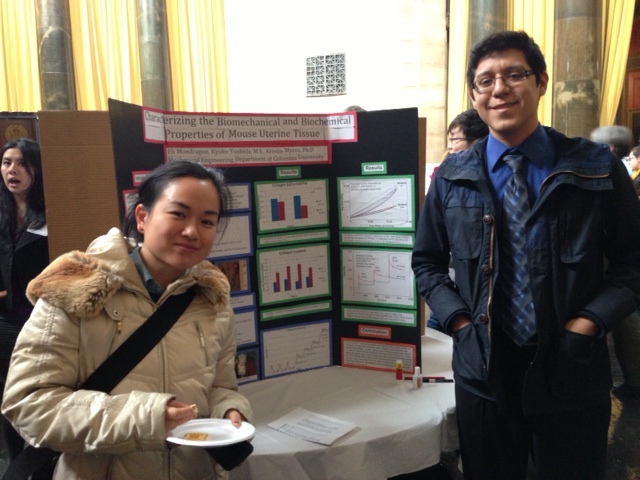
Eli and Kyoko developed new methods to mechanically test uterine tissue to understand its function during pregnancy. Congratulations to Eli for an excellent research poster at this year’s Columbia University Summer Undergraduate Research Fellowship (SURF) poster session at the Low Library.
Our lab would like to welcome a new PhD student to Columbia and the Department of Mechanical Engineering – Ashutosh Giri. Ash comes to us from the University of Pittsburgh and Adelphi University. This semester he will be TAing the Introduction to Mechanical Engineering Course with Prof. Myers.
Filed under People
Please see our Publications page for links to open access PDFs of a majority of our articles. Also please check out our new Google Scholar profile for a comprehensive list of articles and conference proceedings.
A new study by the World Health Organization released this month reports that preterm birth rates are on the rise around the world. The causes of these premature births and the reasons for their rate increase are multifactorial and location specific. In the US, despite advances in prenatal care, the preterm birth rate is among the highest at 12%, with over half a million babies born premature each year. This study highlights the need to further understand pregnancy and the mechanisms that keep the mother and baby healthy.
Click on the links for a copy of the report from the WHO and an interactive map on the March of Dimes website.
[World Health Organization – Born Too Soon: The Global Action Report on Preterm Birth]
[March of Dimes – Interactive Map of Preterm Birth Rates]
[New York Times – U.S. Lags in Global Measures of Preterm Birth]
Filed under In the News
The work of our collaborators in the Kitajewski lab at the Columbia University Medical Center were featured in a news brief for their groundbreaking work on the Anthrax Toxin Receptor 2 (ANTXR2) protein. Their work explores the importance of cervical extracellular matrix maintenance for a healthy labor and birth.
Filed under Articles, In the News, People, Science
The New York Times reports the success of a cervical pessary study in The Lancet today. The study claims the pessary device was successful at preventing preterm labor in a cohort of women at high-risk for preterm birth, identified by a ‘short’ cervical length in an ultrasound screening. It is still unclear how the pessary is able to maintain the cervix from dialating prematurely, but the results of this clinical trial are promising and provide evidence that the biomechanical properties of the pelvic region play a role in the progression of labor and cervical dilation.
[NYTimes]
[The Lancet]
Filed under In the News
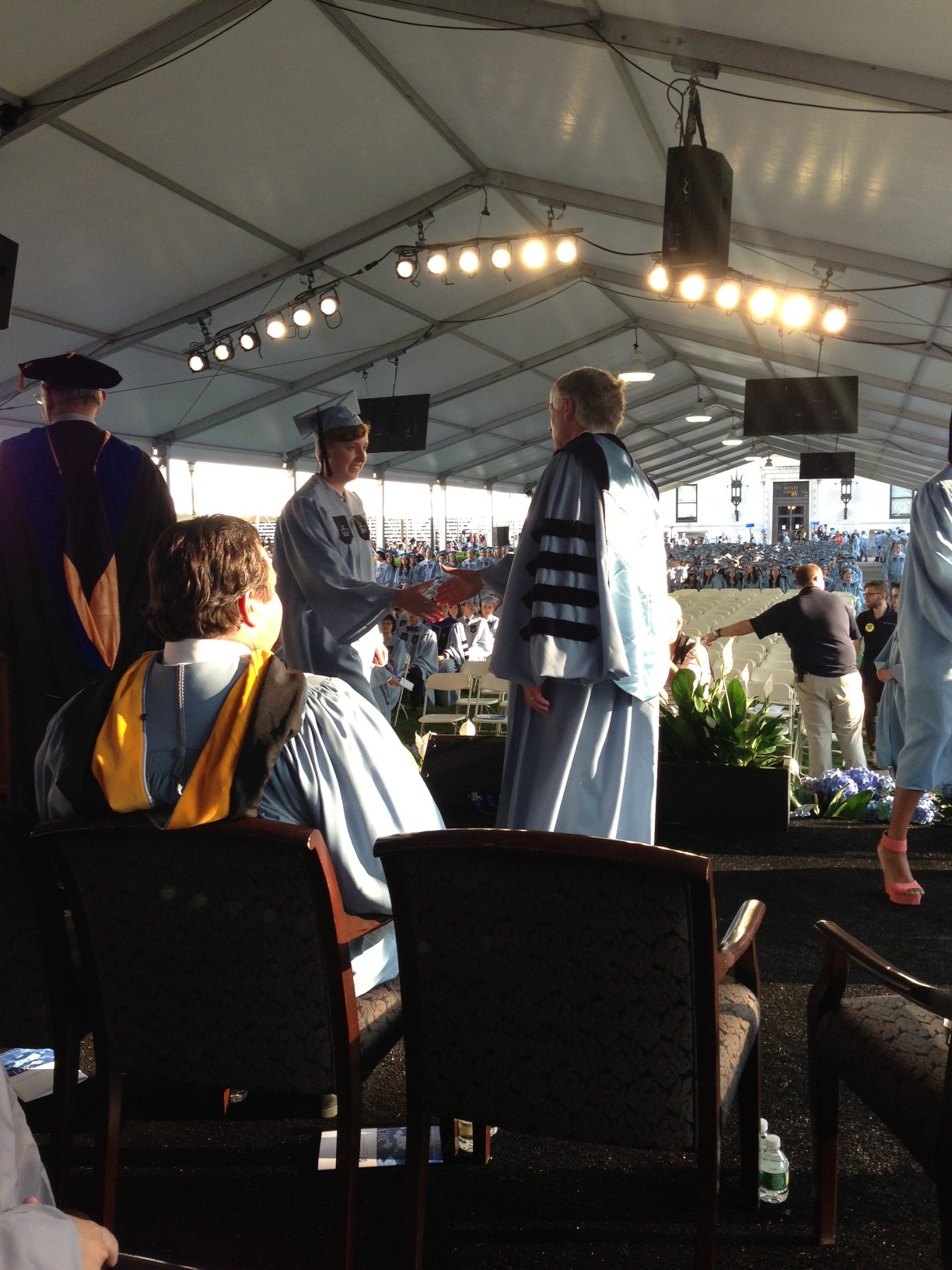
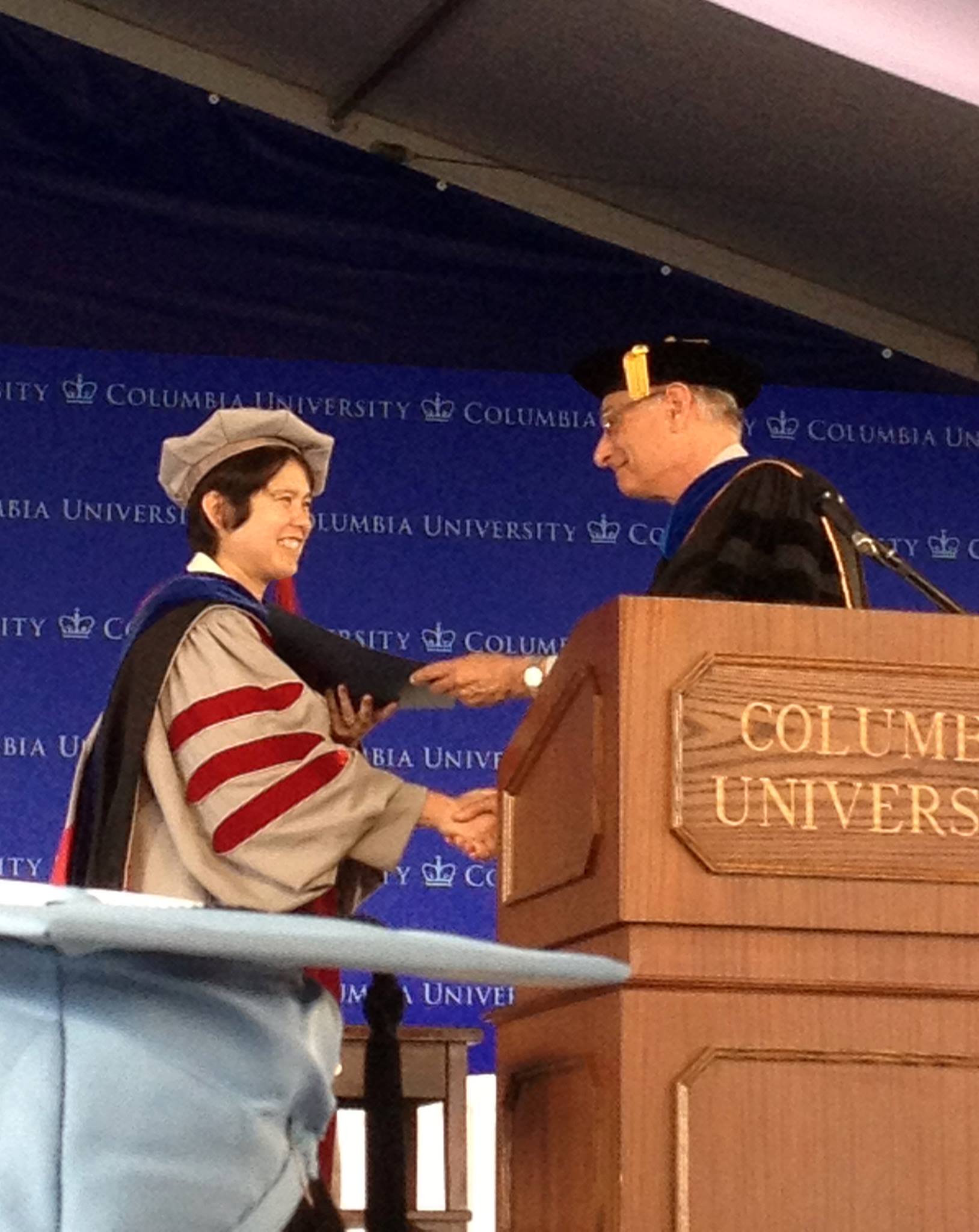
Professor Myers will be given the Rodriguez Family Junior Faculty Development Award at the School of Engineering and Applied Sciences (SEAS) Class Day on May 14, 2012. This award was founded by SEAS alumni Ana Rodriguez (SEAS’86, ’88) and her brother, Marcos (SEAS’83), to support and recognize the achievements of under-represented junior faculty.
A couple weeks ago, Kyoko went to Poly Prep to participate in Women’s Innovation Symposium in Engineering (WISE) . The symposium was a great opportunity for girls in middle to high school interested in becoming engineers. The day included a keynote speaker, who talked about what engineers do, a breakout workshop session, and concluded with a presentation from the girls about what they learned. Kristin and Kyoko designed a workshop to teach girls about the strength of materials by running some experiments to measure the mechanical properties of different rubber specimens . The girls had a great time playing with spring gauges and calipers, and got first hand experience on how important it is to run careful experiments! Check out some pictures here.
It was a fun event and a great opportunity to not only to reach out to young aspiring lady engineers, but also to network with other ladies in engineering. We hope to be participating again next year!
Filed under Science
Kyoko’s poster on tensile/swelling tests cervical tissue and Michael’s poster about permeability measurements of human cervical tissue were well-trafficked and appreciated by conference attendees. We are having a great time here making friends and advocating for the importance of biomechanics in the study of preterm birth.
Filed under Science