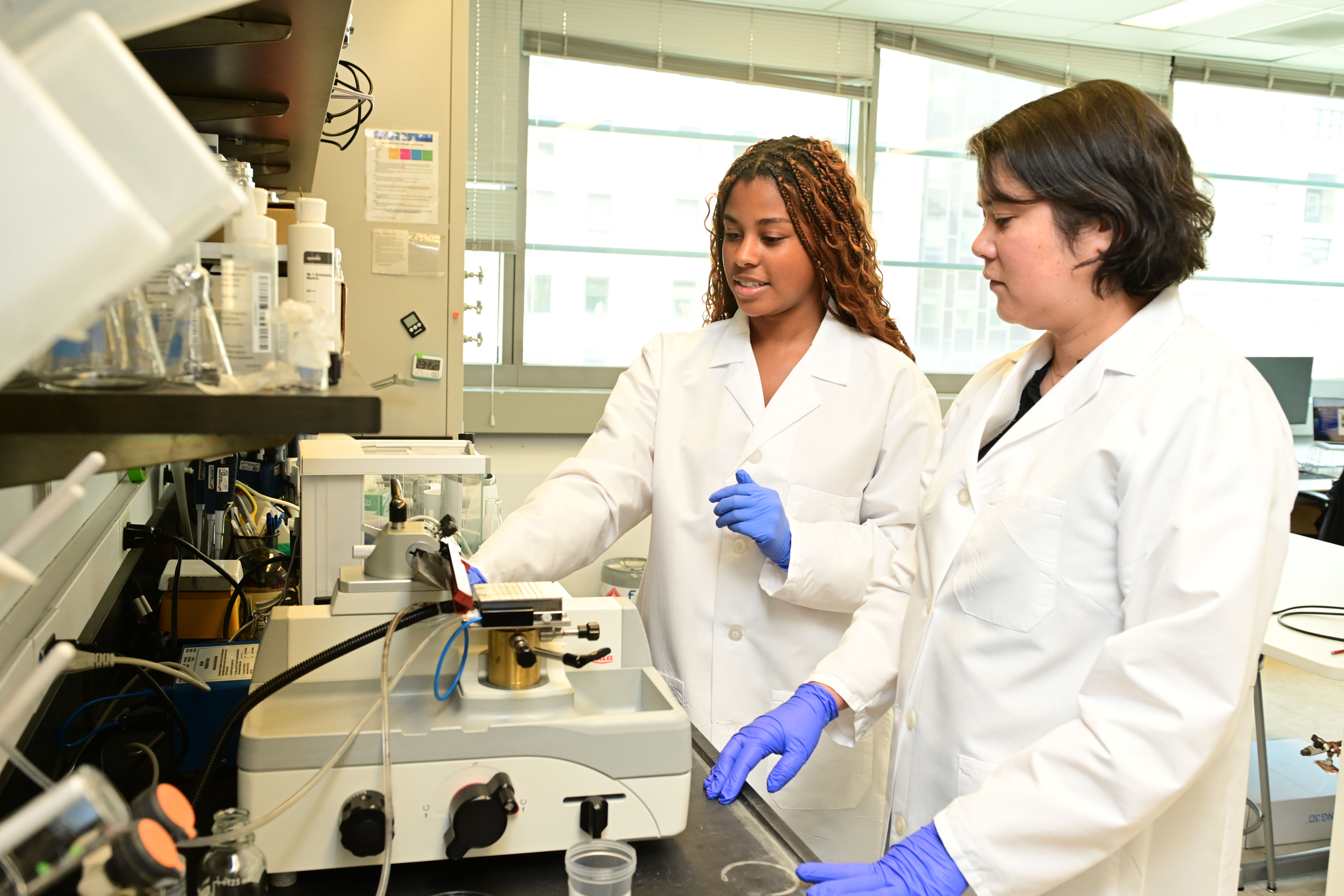
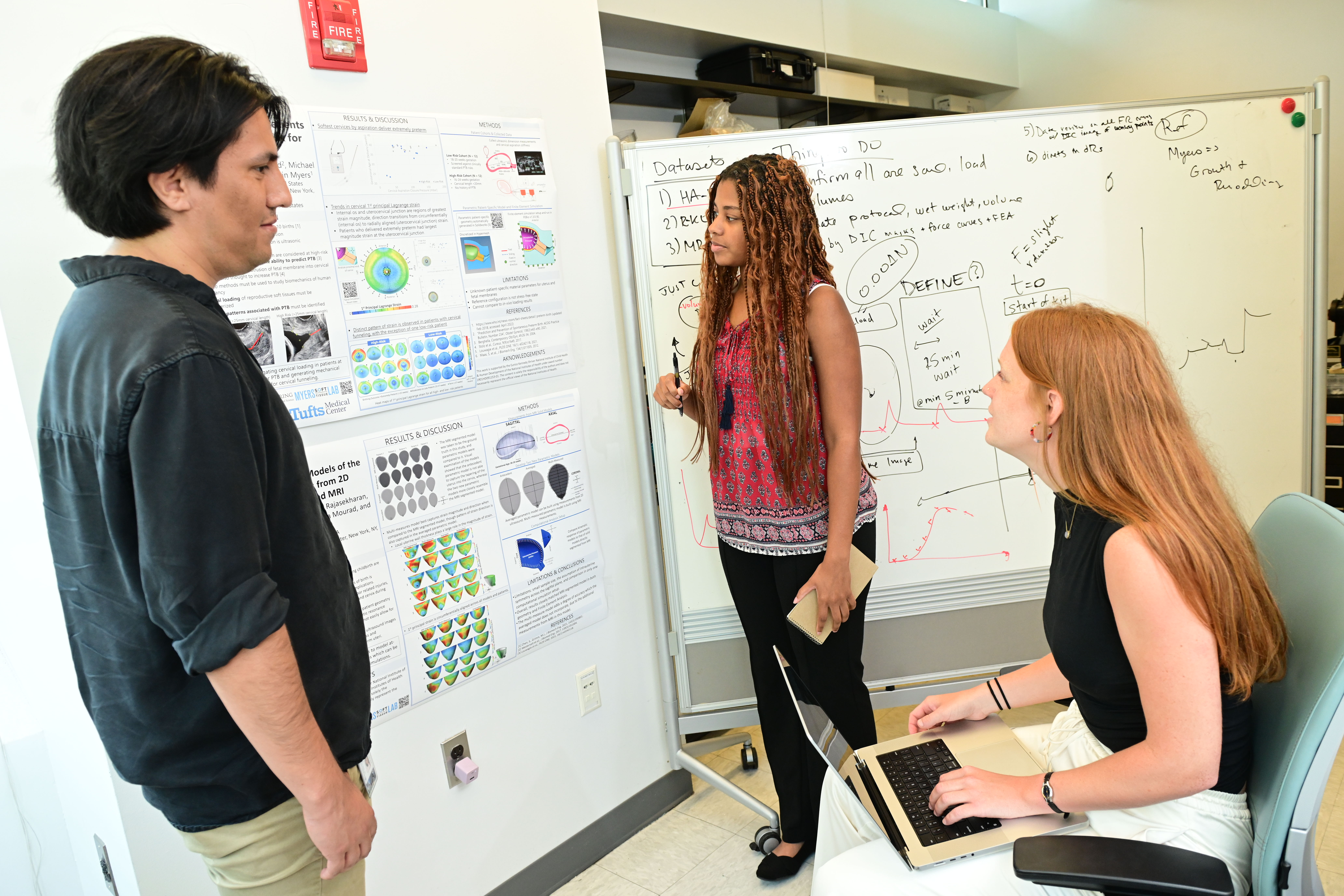
The Myers Lab loved having SURE Fellow, Jayla McCoy in the lab this summer! Jayla is a Mechanical Engineering student with a minor in computer science at the University of Kentucky. Her research project, titled “Using Computational Mechanics to Improve Preterm Birth Risk Assessment”, used a variety of computational tools to improve our inverse finite element analysis workflow on FEBio 4.0. Jayla also examined the impact of precompression & viscoelasticity on simulation results. We enjoyed having Jayla in the lab and can’t wait to see what she does next!
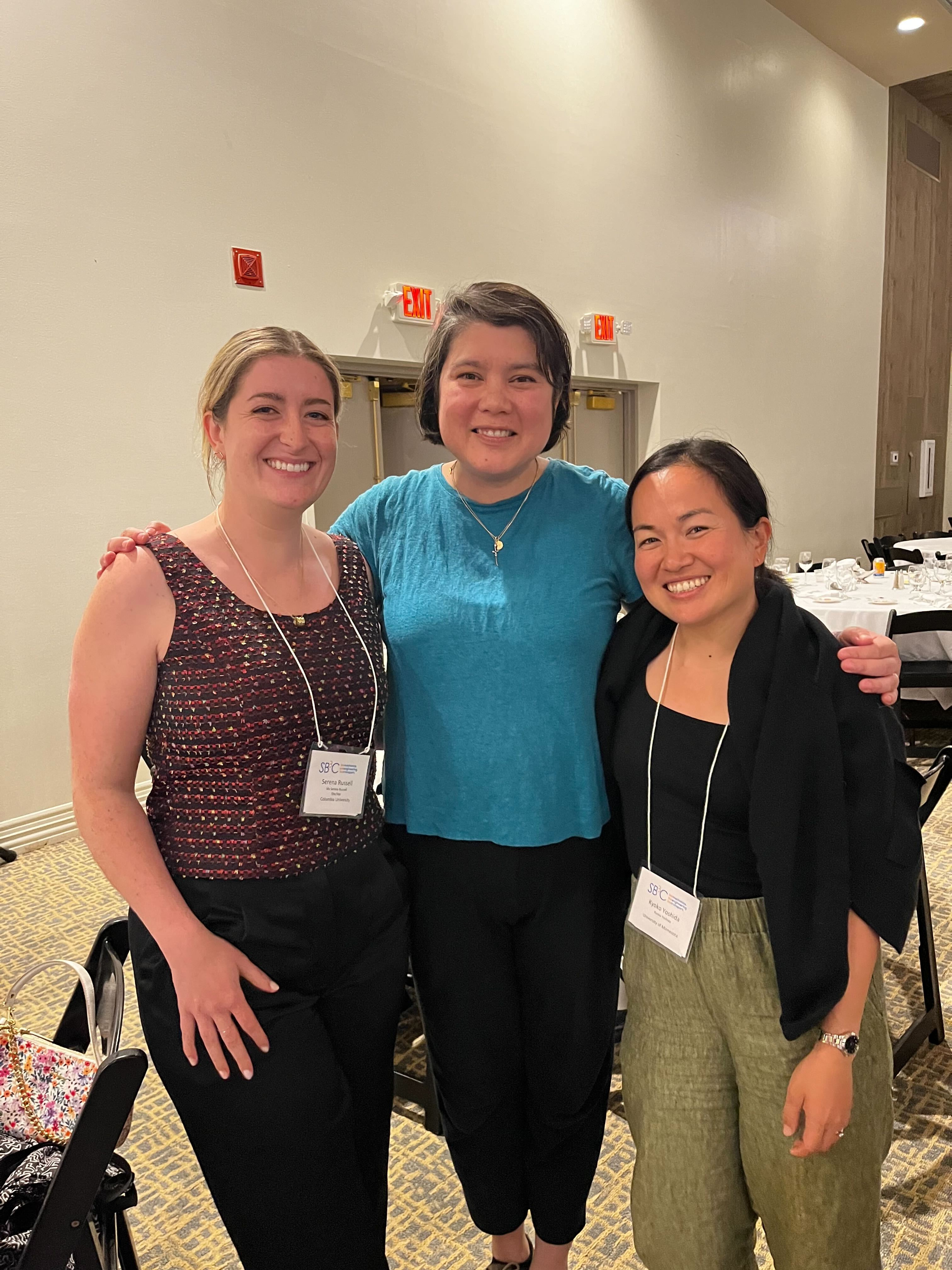
The Myers lab had an excellent start to the summer with Camilo, Daniella, Abby, Serena, Echo, and Adriana presenting their research at the annual SB3C conference in Lake Geneva, Wisconsin!
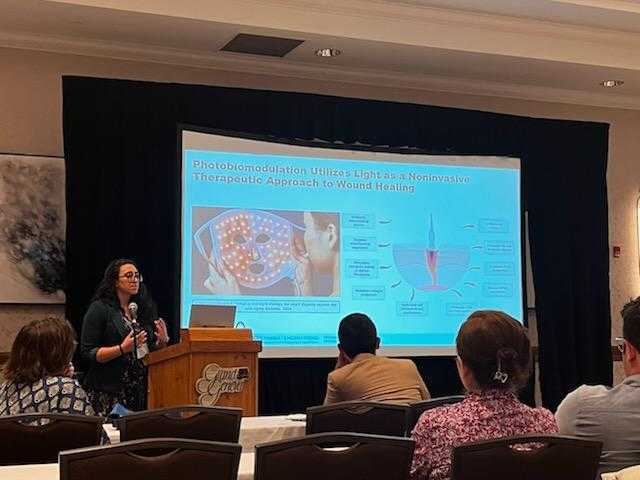
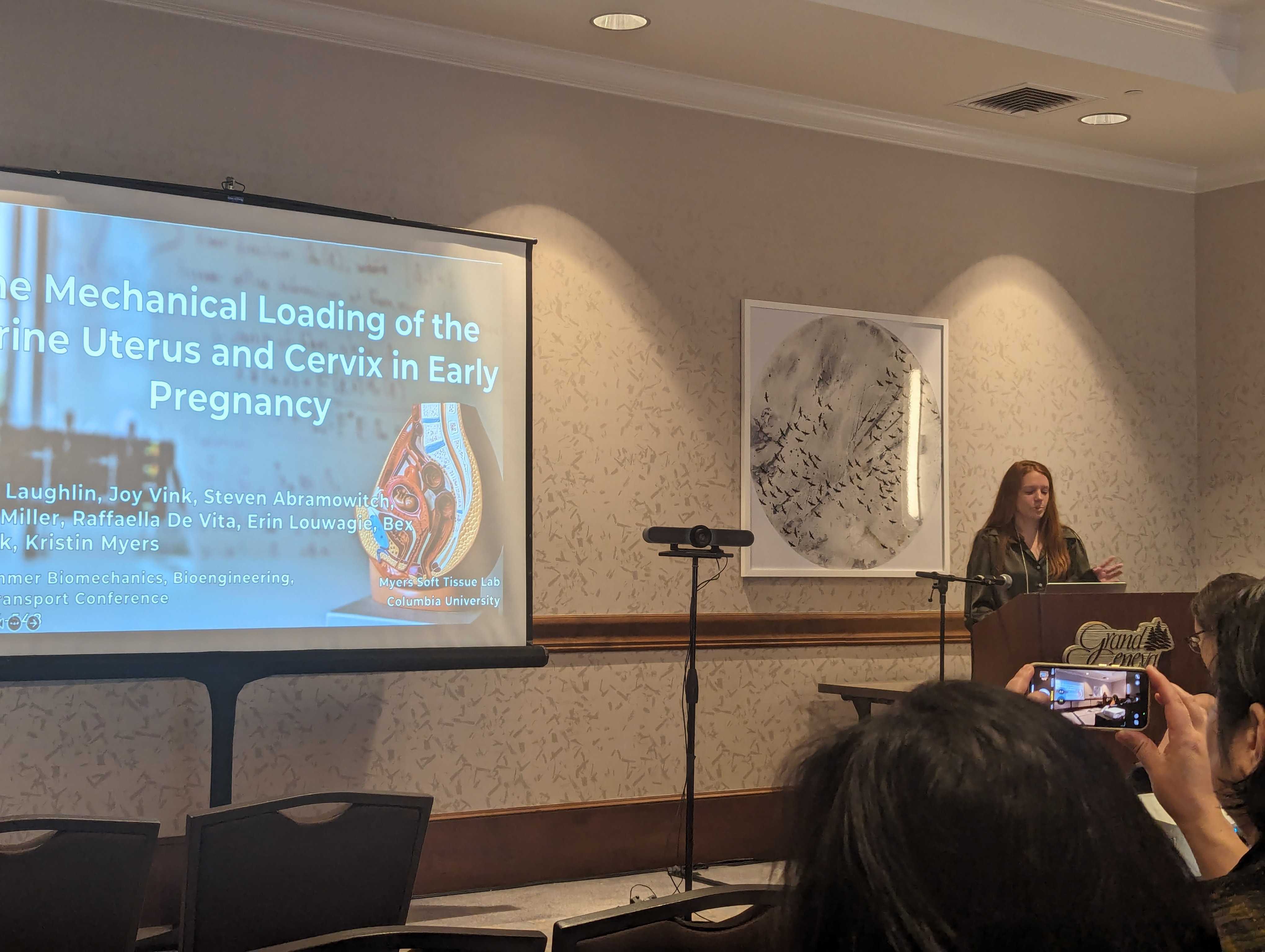
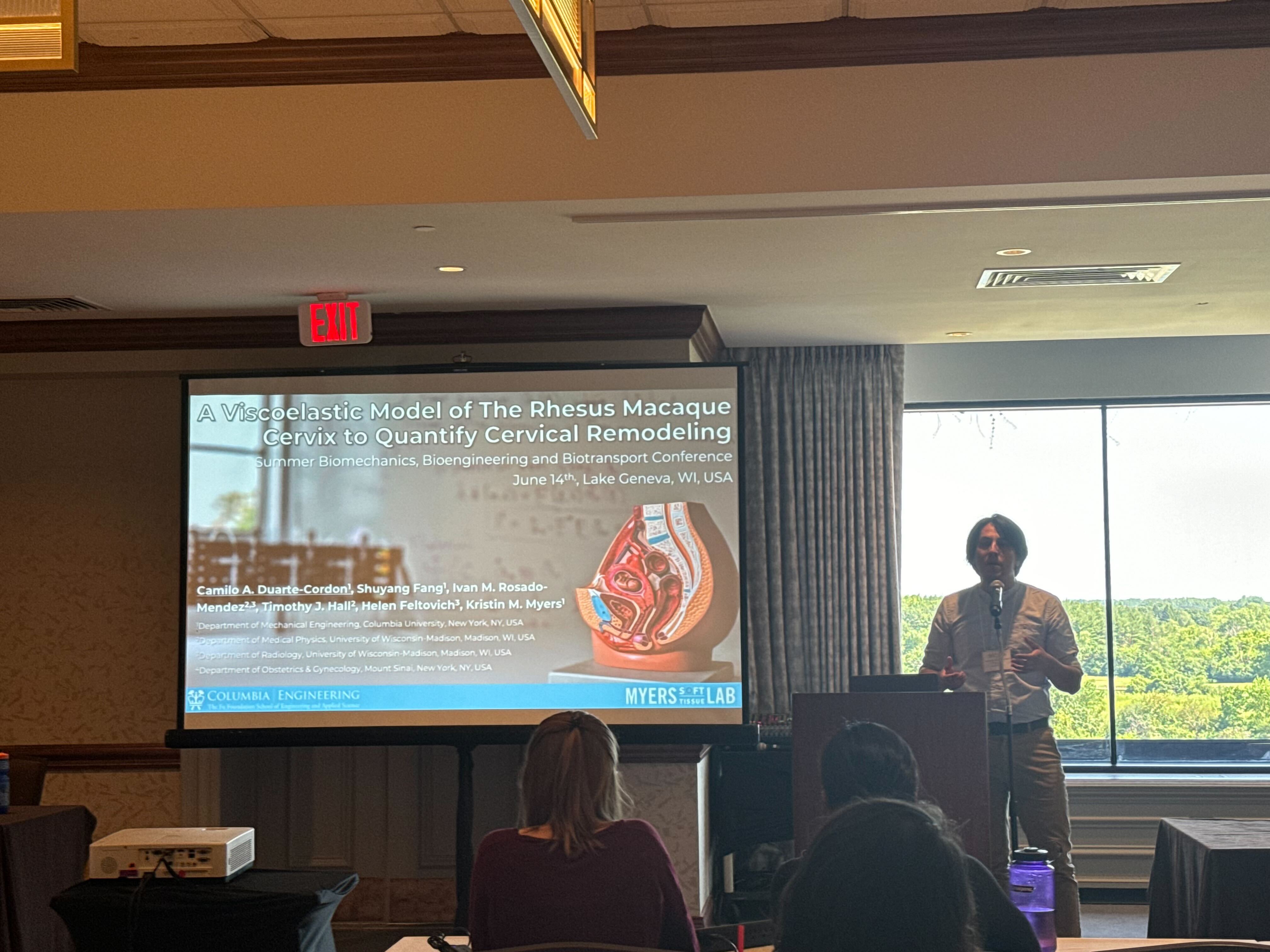
Camilo presented his recent work on viscoelastic modeling during his podium talk titled “A Reactive Viscoelastic Model of the Rhesus Macaque Cervix to Quantify Cervical Remodeling” in the Reproductive Biomechanics session. Daniella’s talk, “Photosensitizer – Mediated Low Level Light Exposure Alters the Nonpregnant and Pregnant Human Cervix Tissue”, sparked conversation surrounding potential treatments of Preterm Birth. In the computational modeling session, Abby presented her talk on “The Mechanical Loading of the Murine Uterus and Cervix in Early Pregnancy”, which led to future project ideas with the other members of the LEAP team!
In the poster session, Serena presented her research poster, “MRC2 is Necessary for Typical Cervical Remodeling in Rodent Pregnancy”, and Echo presented her poster, “Spatially Mapping the Time Dependent Material Properties of the Nonhuman Primate Cervix Through Gestation”. Both posters received great feedback and sparked interesting and thoughtful conversation with attendees.
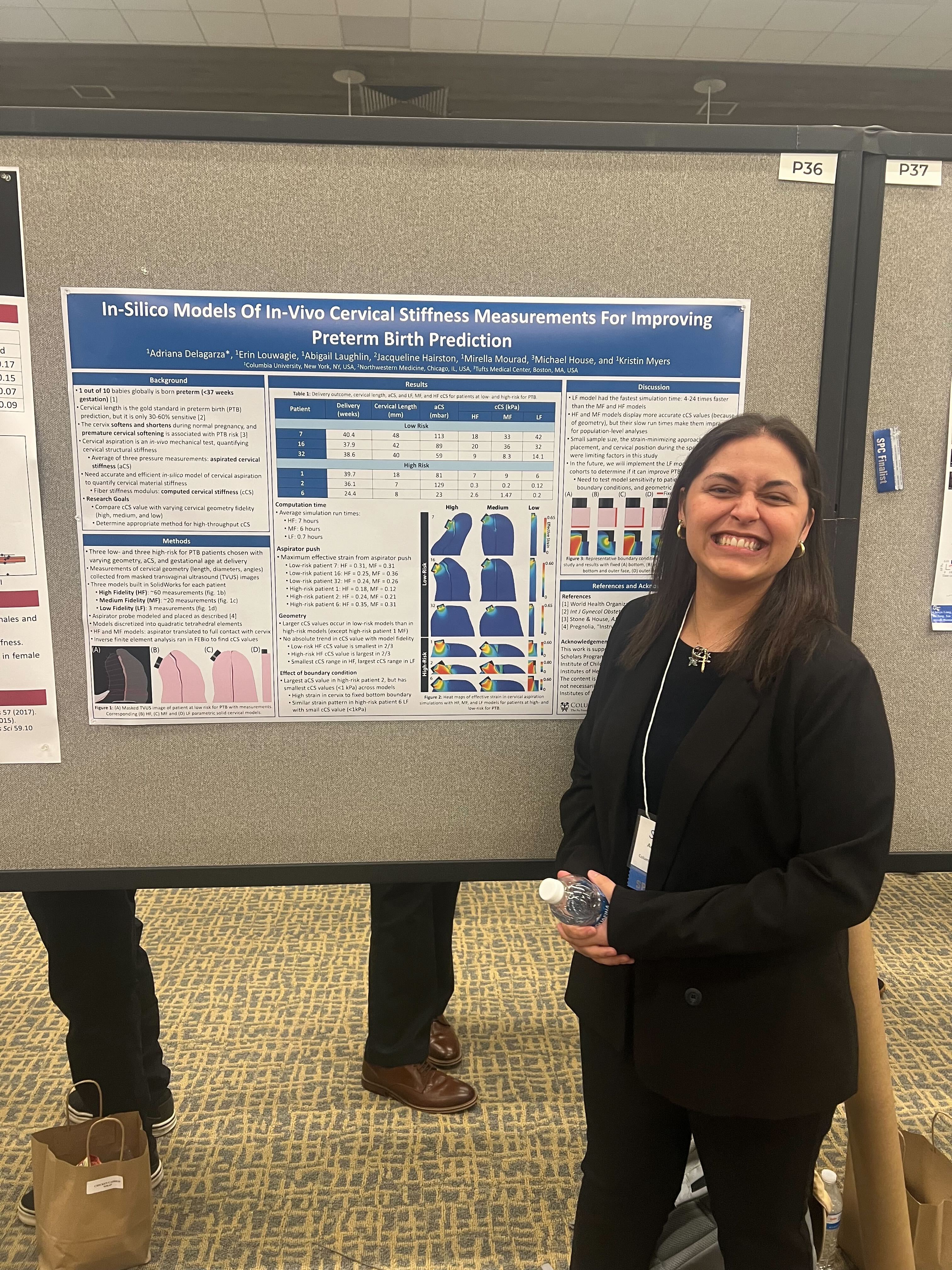
Adriana was a finalist in the undergraduate poster competition and did a fantastic job sharing her work on “In Silico Models of In-Vivo Cervical Stiffness Measurements for Improving Preterm Birth Prediction”.
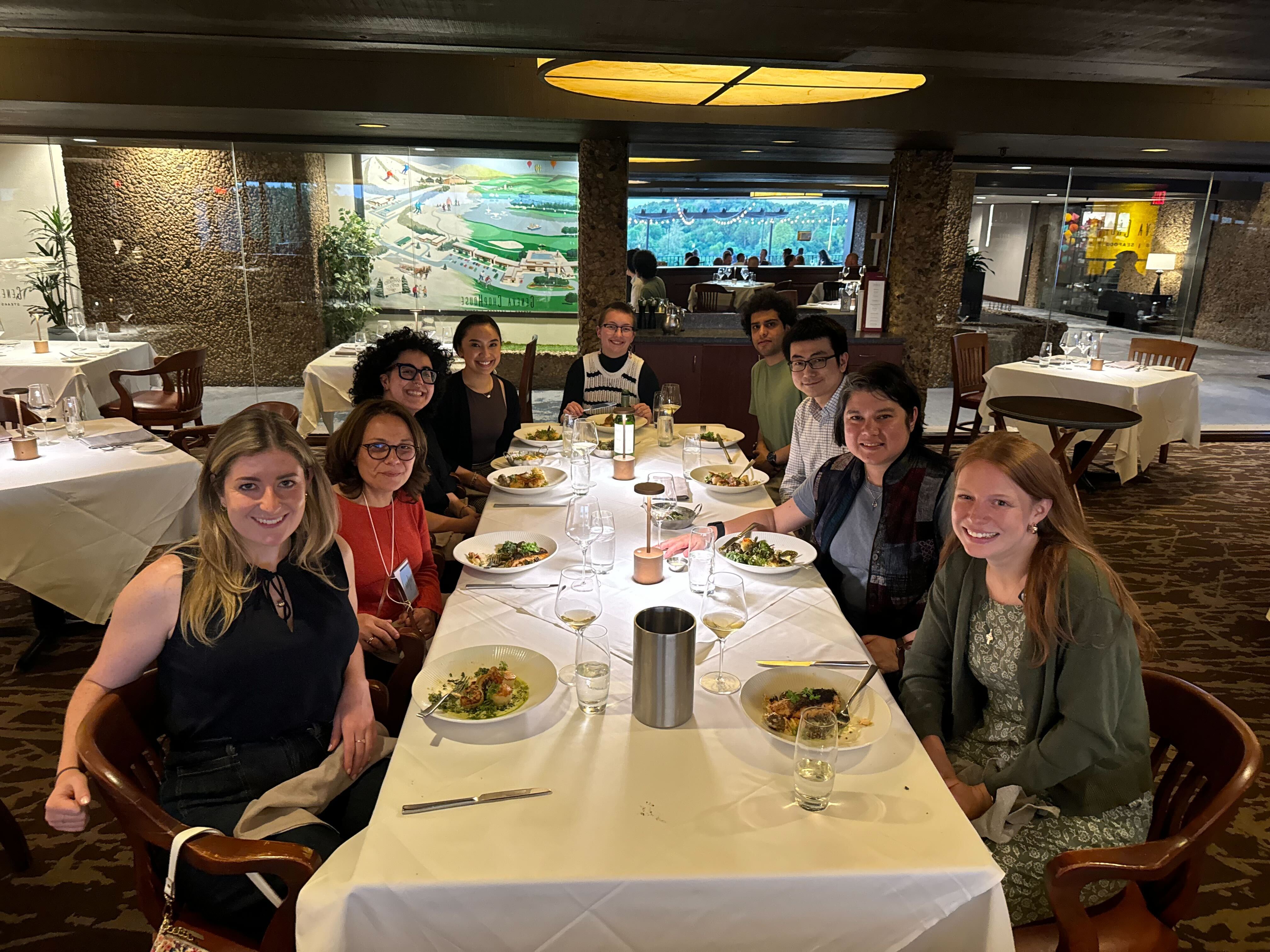
Other conference highlights included meeting with LEAP collaborators over dinner, a celebratory dinner in Lake Geneva with a huge Columbia crew, and of course enjoying the music at the yearly BEDRock concert!! We already can’t wait for next year!
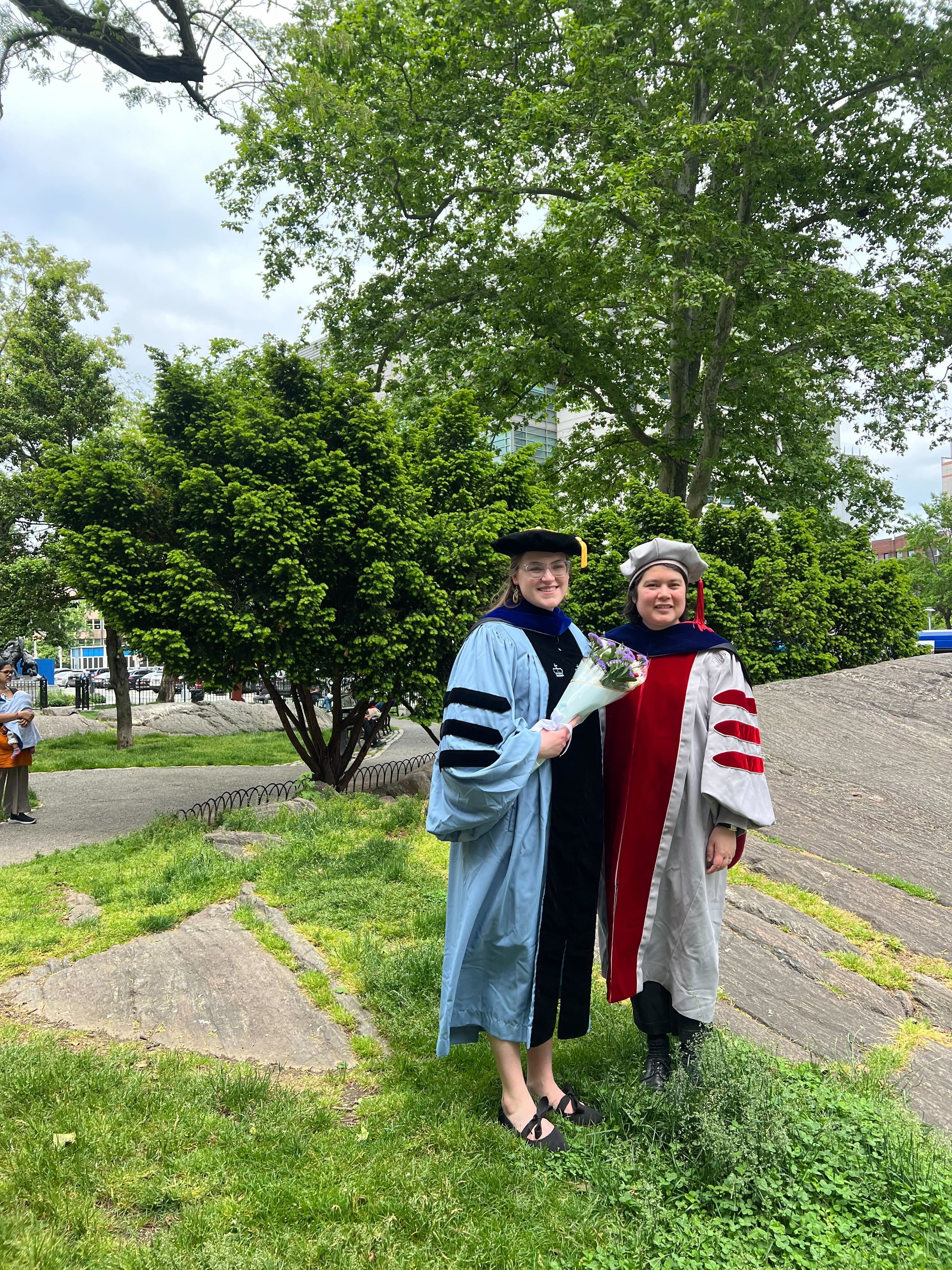
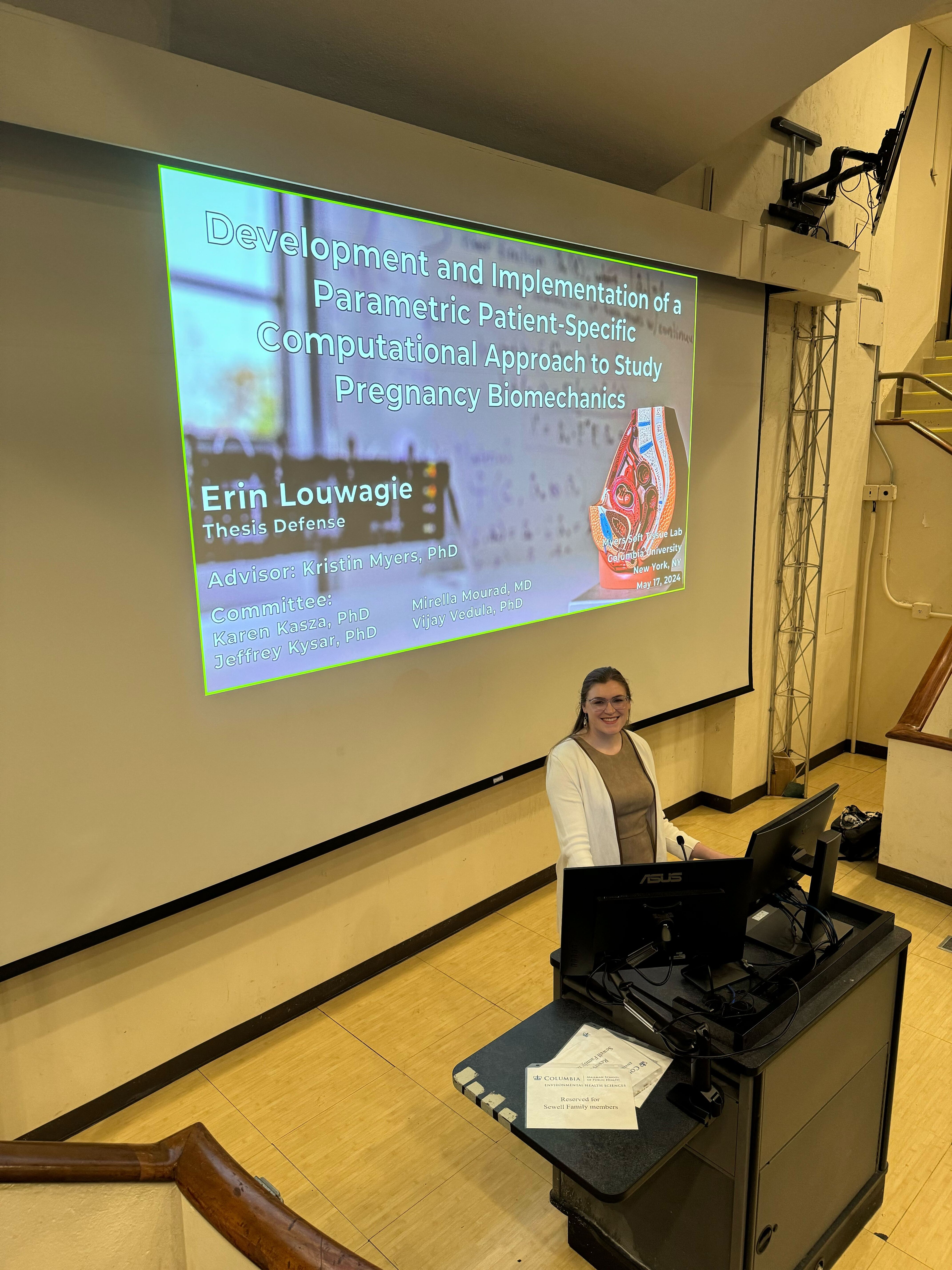
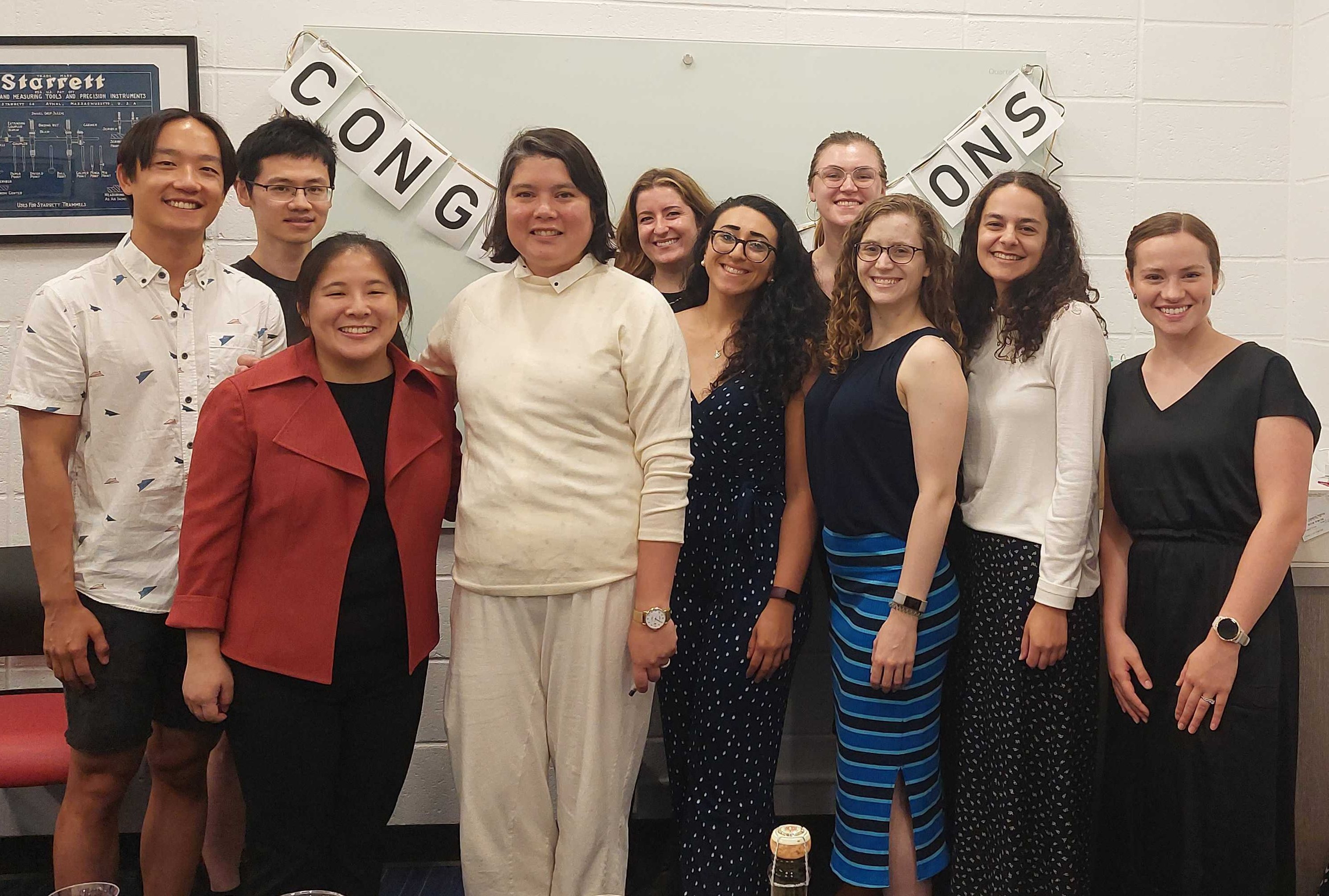
The Myers Lab celebrates Erin Louwagie successfully defending her doctoral thesis! Erin’s research focused on developing parametric, patient-specific computational models to study pregnancy biomechanics for patients at low-risk and high-risk for preterm birth! Great work Dr. Louwagie!!
We present tension-compression mechanical data, nonpregnant vs. pregnant comparison, and mechanical parameters fit to a microstructurally-inspired material model for the human uterus, with tissue fiber architecture characterized via optical coherence tomography. The pregnant human uterus was found to be less stiff, more extensible, and more dispersed in its fiber architecture compared to nonpregnancy.
We proposed two new parametric methods to model the at-term human uterus: one with numerous detailed measurements of the uterine coronal shape and one with an averaged uterine coronal shape. We compared the two new parametric modeling methods to our previous parametric modeling approach and to models generated from MRI segmentation through computational simulations of uterine pressurization. These approaches make it possible to study a wide range of maternal anatomy in birthing simulation.
“My hope is that we could take a simplistic ultrasonic scan of maternal anatomy and be able to assess how this uterus is going to grow and stretch, and better time when labour is going to happen.” Check out the linked article.
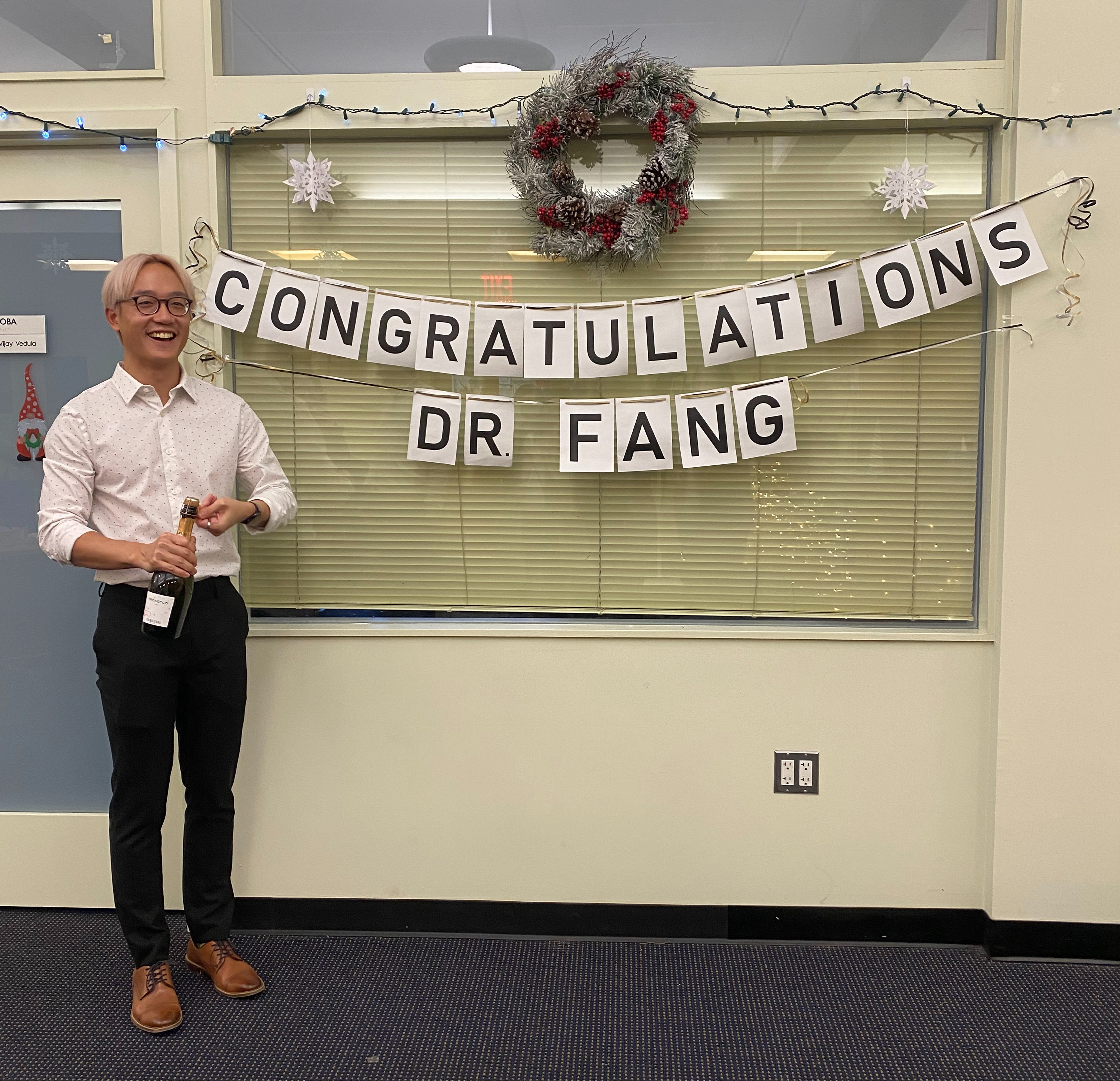
The Myers Lab celebrates Shuyang Fang successfully defending his doctoral thesis. His research investigated the mechanical properties of the human uterus, nonhuman primate cervix, and fetal membrane-uterine wall adhesion. Great work Dr. Fang!
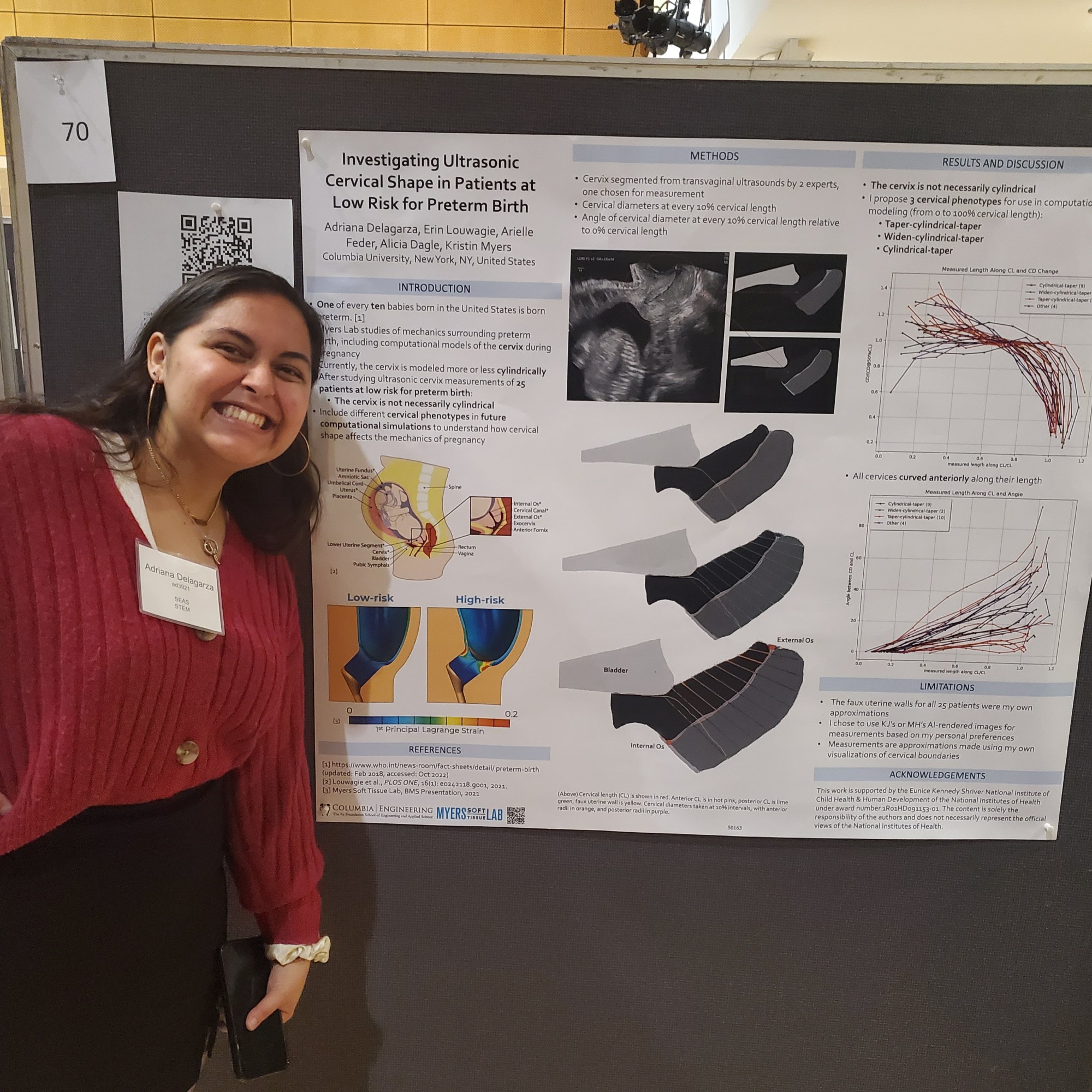
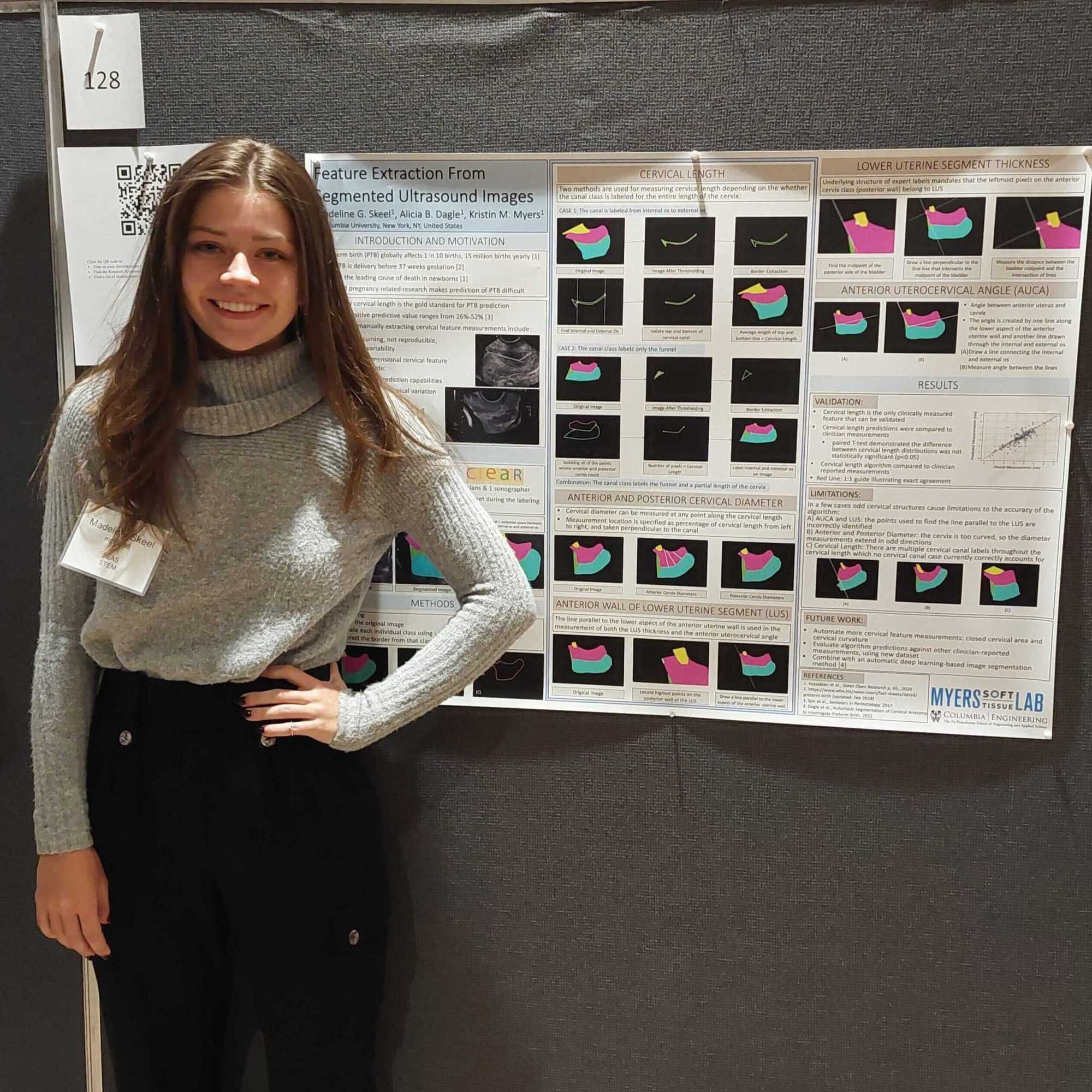
Adriana Delagarza, Madeline Skeel, and Gabriel Guerra Trigo presented their summer research at the Columbia Undergraduate Research Symposium. Great work, all!
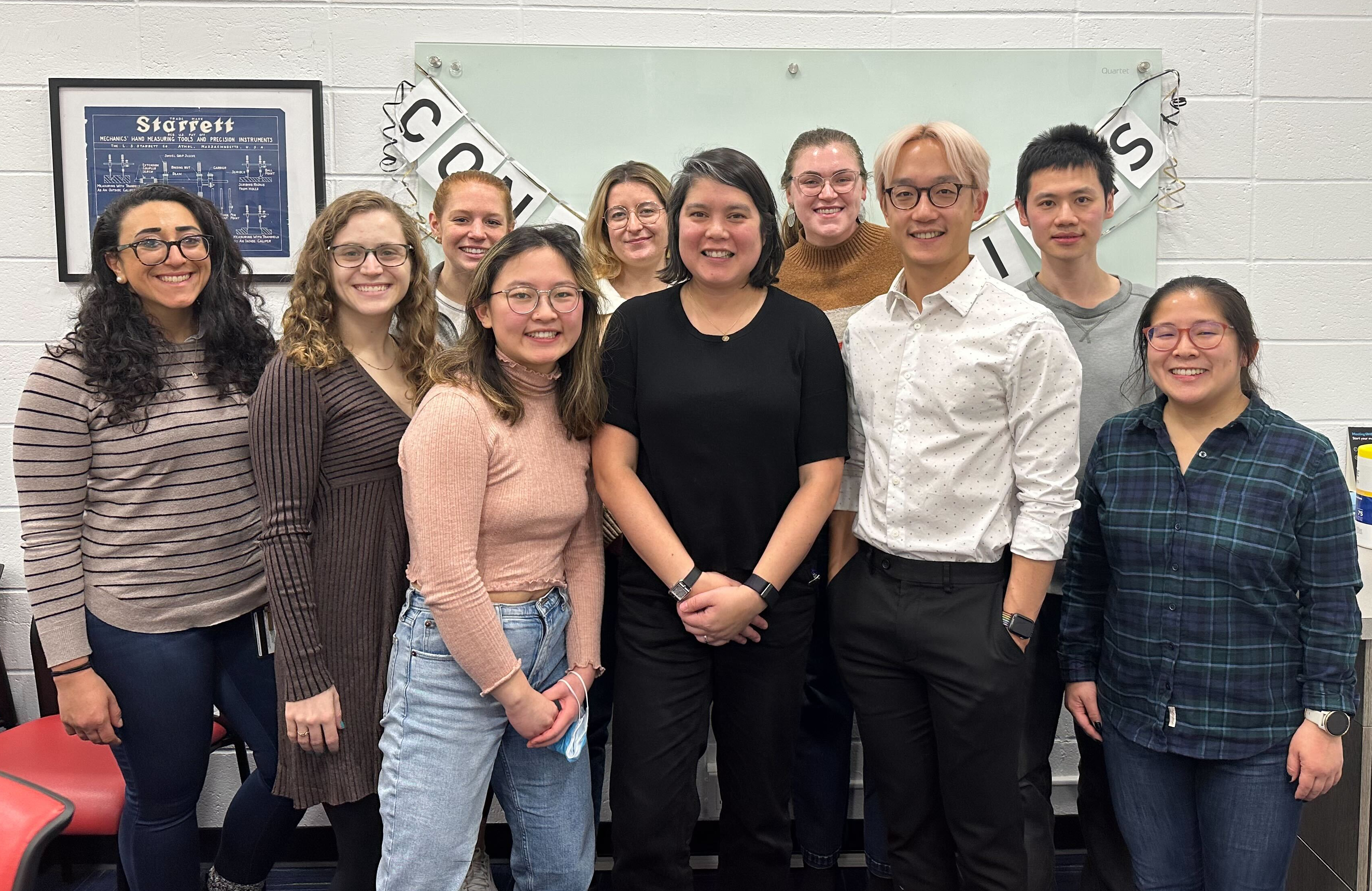
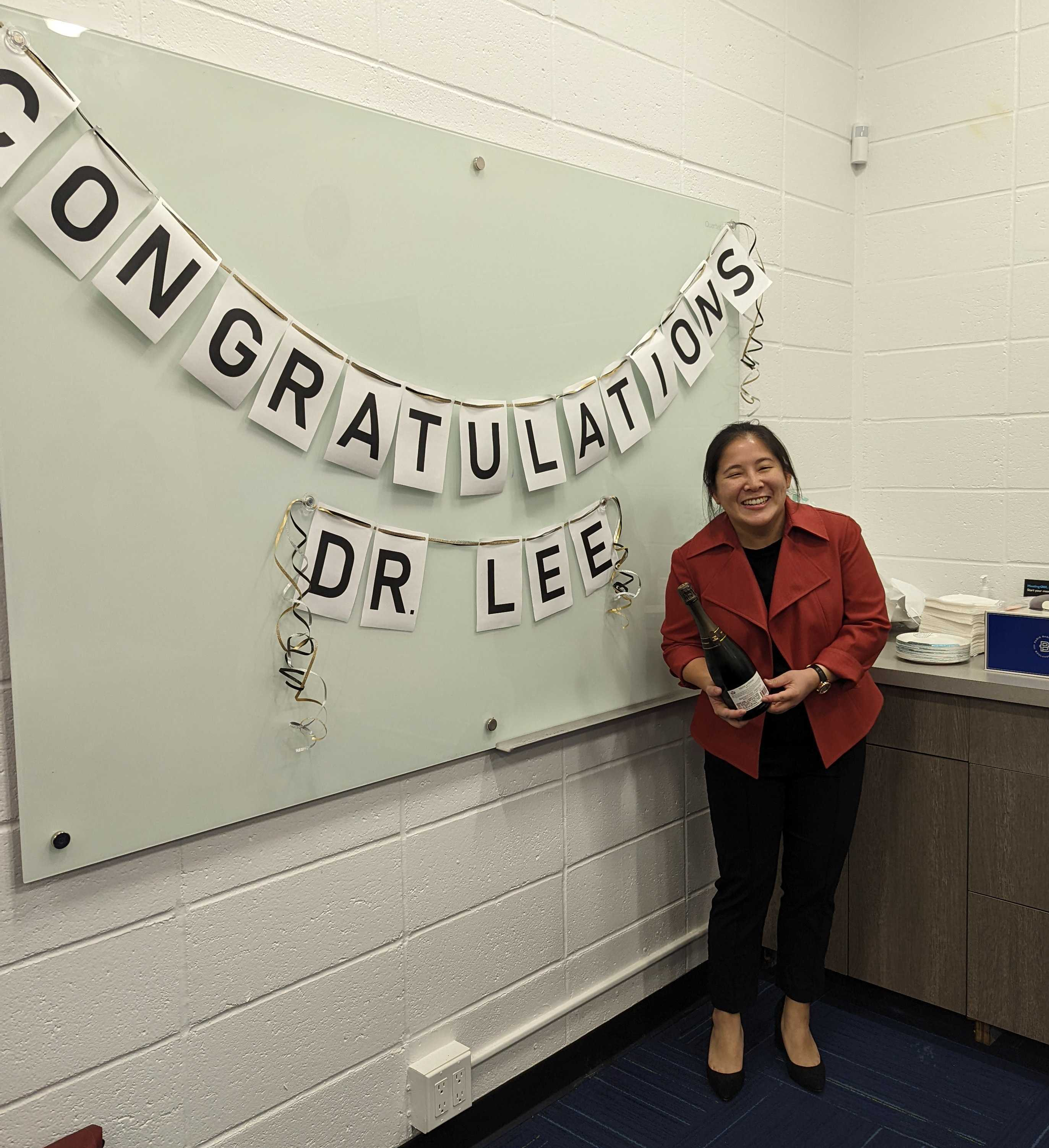
The Myers Lab congratulates Nicole Lee on successfully defending her doctoral thesis. Her research investigated the mechanical role of extracellular matrix components in cervical remodeling. Way to go Dr. Lee!







 kristinmyerscolumbia.com