Last week, the Myers lab had a fabulous time at the Society for Reproductive Investigation Annual meeting! At the meeting, Echo had the opportunity to share some of her work in a poster presentation titled, “Cervical Modeling in the Rhesus Macaque: A Systematic Proteomic Analysis”. Congratulations Echo!
In our newest paper, we quantified structural features of human pregnancy by assessing maternal reproductive tissues and estimated fetal weight in 47 low-risk pregnancies at four gestational timepoints. We measured uterocervical size and estimated fetal weight via ultrasound and used mechanical aspiration to measure cervical stiffness. From this data, patient- specific uterocervical solid models were built for each time point, and uterocervical dimensions and cervical stiffness rate changes were assessed. We found uterine growth rates and time and direction dependent, with cervical softening occurring fastest in early gestation and cervical shortening fastest in late gestation. This work enables computational modeling platforms (i.e. digital twins) to explore the structural performance of the uterus and cervix in pregnancy.
Through this work, we have released parametric solid models, based on measurements collected from ultrasonic images of the pregnant uterus and cervix. These models were created for each of the 47 longitudinal study participants at timepoints from the late first trimester to the middle third trimester.
Abby and Serena had an awesome time representing the Myers Lab at the first ever “Engineering for Women’s Health Conference” at Northeastern University! Their posters, “In-Silico Models of In-Vivo Cervical Stiffness Measurements for Improving Preterm Birth Prediction“, and “Relaxin is Necessary for Normal Murine Cervical Remodeling in Pregnancy” were awarded first and second place, respectively, at the poster competition! We are so grateful to the conference organizers and all of the incredible speakers at Northeastern for putting on such a great program!
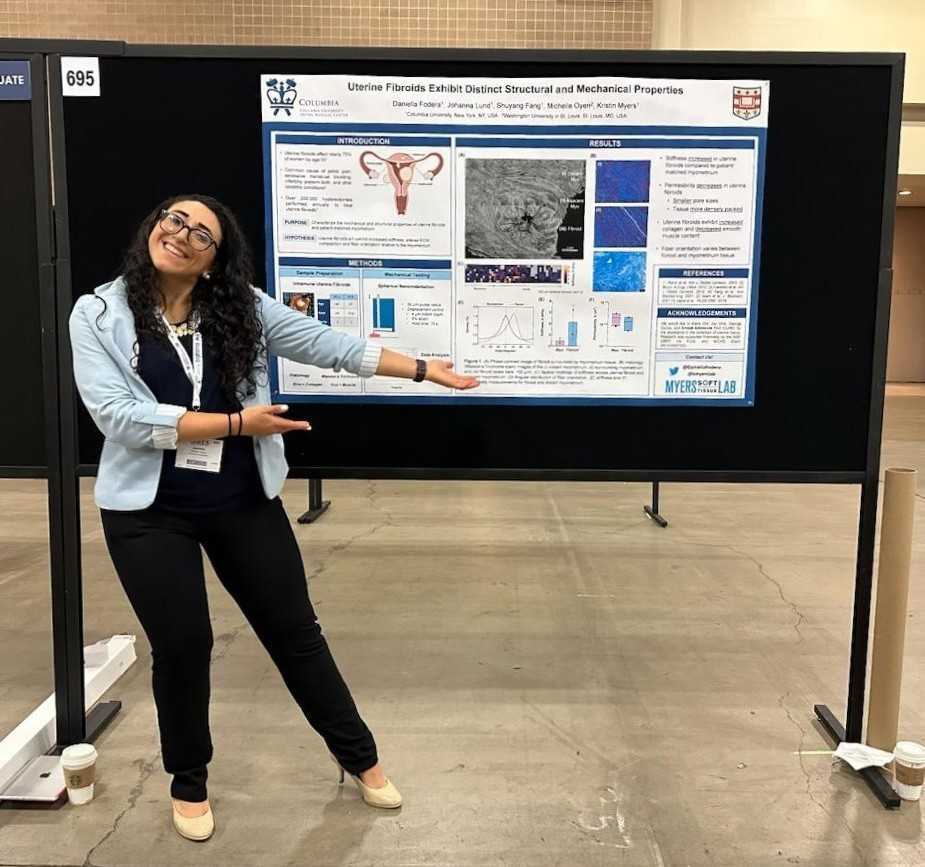
The Myers Lab wants to congratulate Daniella Fodera, a 5th year PhD Student in Biomedical Engineering, on being awarded the NIH’s F31 Predoctoral Fellowship through the NICHD!! Daniella will be co-advised by Dr. Kristin Myers in Mechanical Engineering and Dr. Lance Kam in Biomedical Engineering to study the “Biomechanics and mechanobiology of human uterine fibroids”.
Uterine fibroids are noncancerous tumors that form within the uterus, affecting nearly 70 – 80% of women in their lifetimes, and are a major cause of severe pain, abnormal bleeding, and infertility. The goal of this research is to investigate the role of mechanics in the pathophysiology of uterine fibroids at the cell and tissue length scales. Using this multi-scale, multi-faceted engineering-based approach, we seek to establish fundamental knowledge on uterine fibroids so that improved diagnostic and treatment techniques may be developed to lower the disease burden for millions of women.
The Myers Lab loved having SURE Fellow, Jayla McCoy in the lab this summer! Jayla is a Mechanical Engineering student with a minor in computer science at the University of Kentucky. Her research project, titled “Using Computational Mechanics to Improve Preterm Birth Risk Assessment”, used a variety of computational tools to improve our inverse finite element analysis workflow on FEBio 4.0. Jayla also examined the impact of precompression & viscoelasticity on simulation results. We enjoyed having Jayla in the lab and can’t wait to see what she does next!
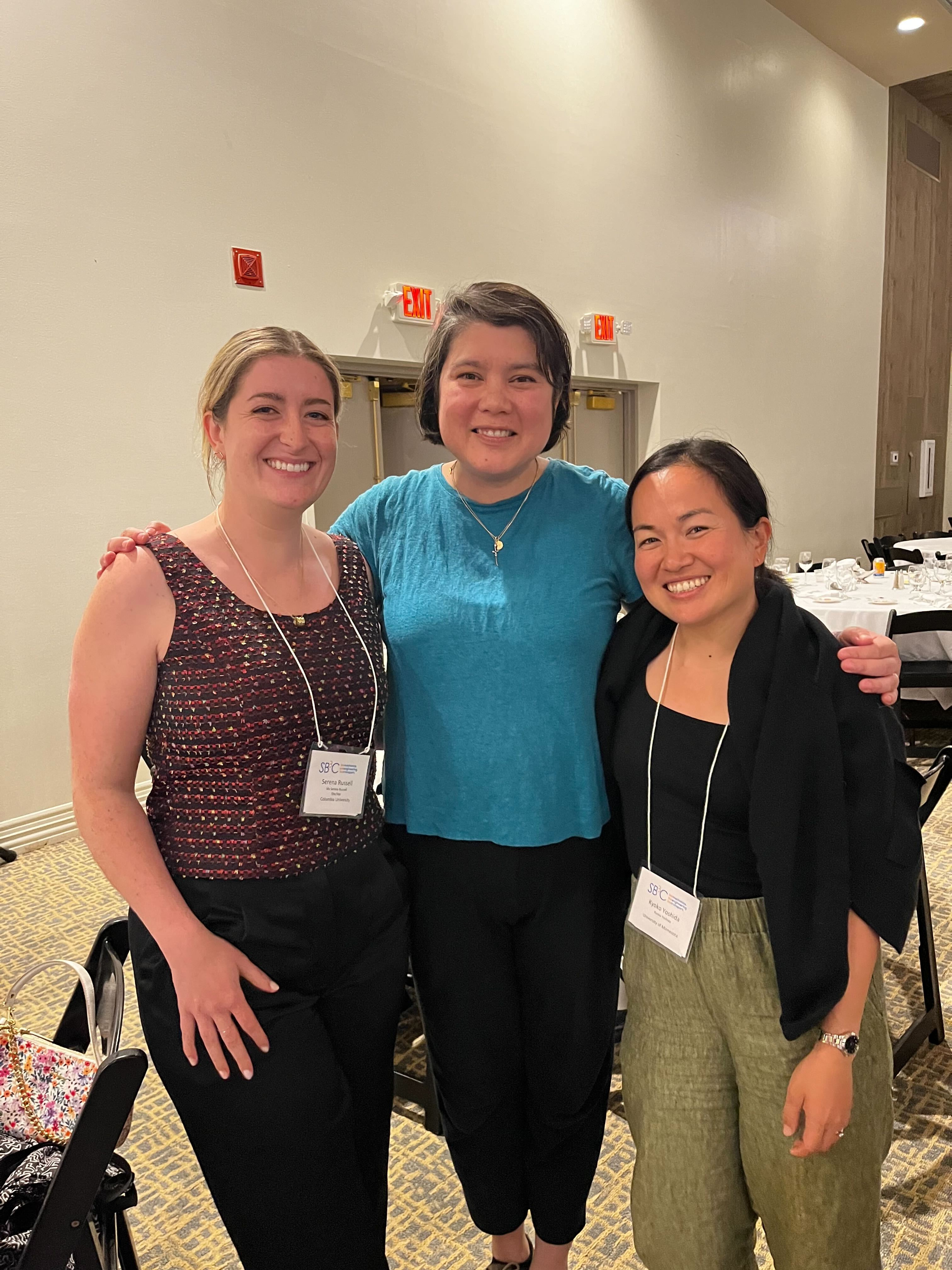
The Myers lab had an excellent start to the summer with Camilo, Daniella, Abby, Serena, Echo, and Adriana presenting their research at the annual SB3C conference in Lake Geneva, Wisconsin!
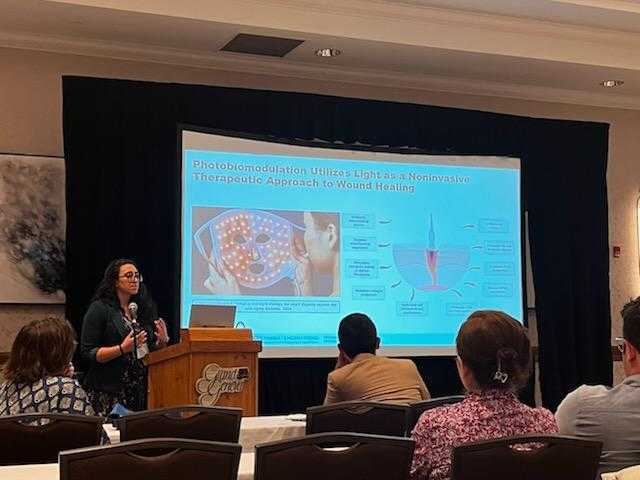
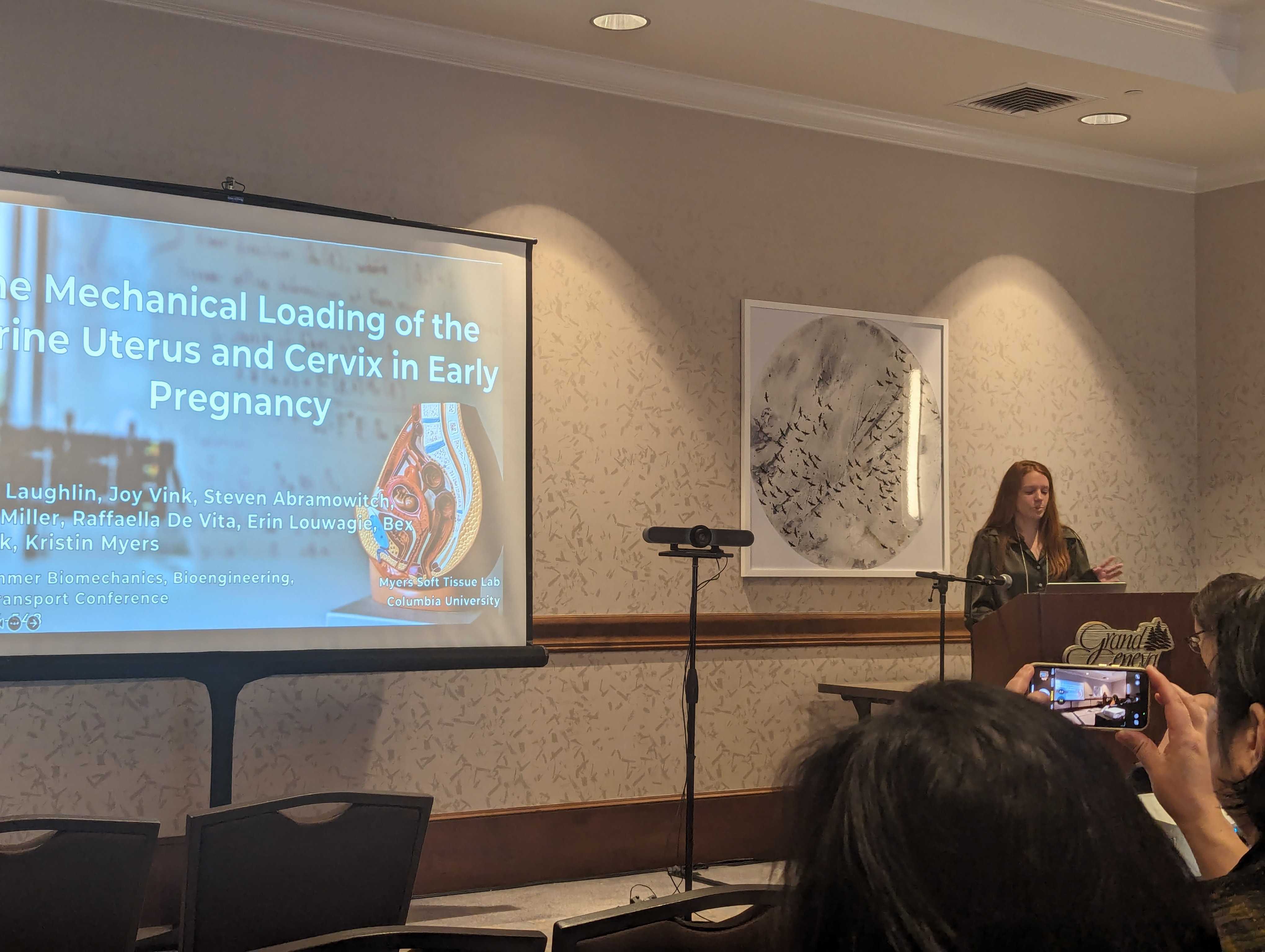
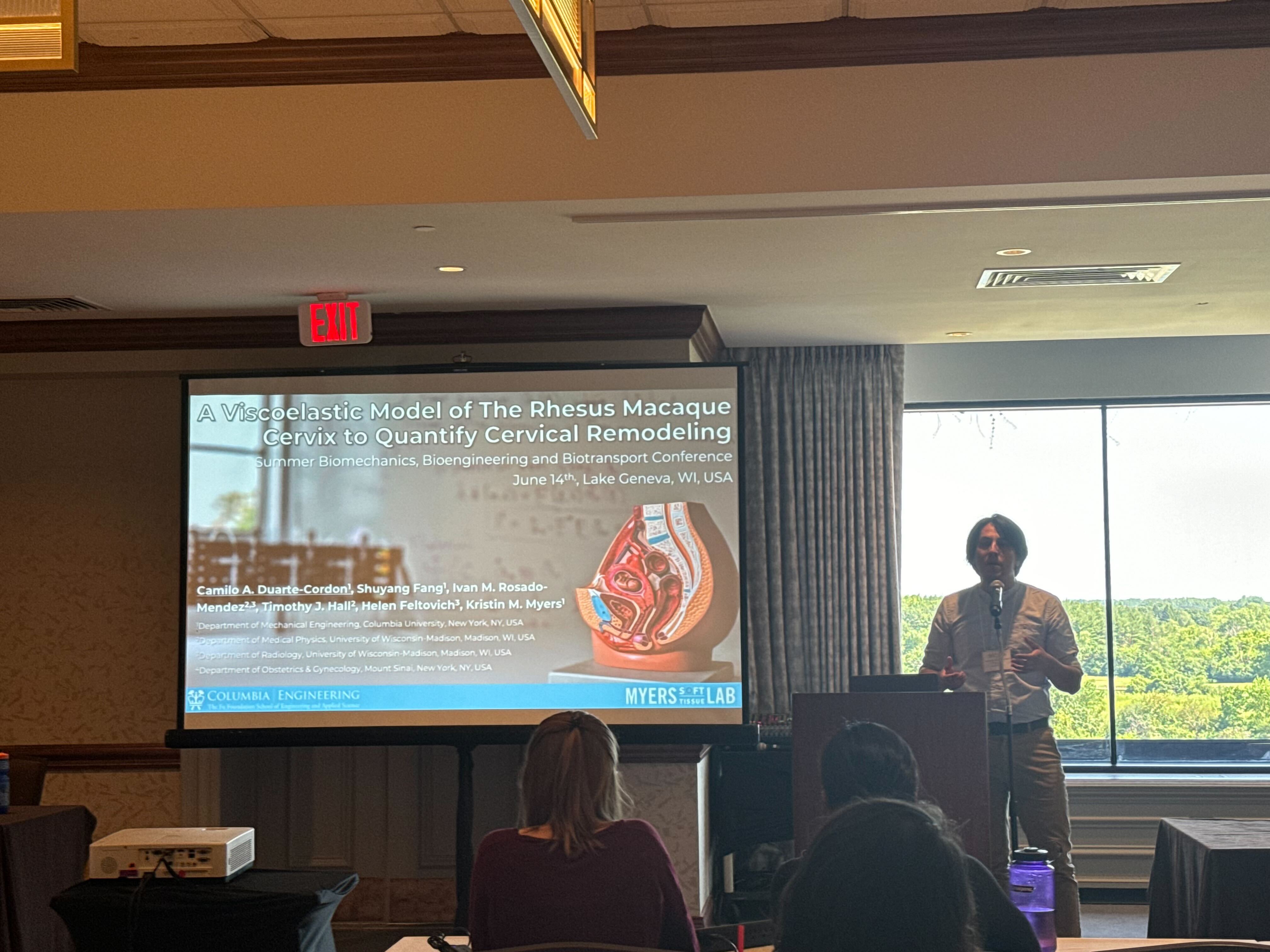
Camilo presented his recent work on viscoelastic modeling during his podium talk titled “A Reactive Viscoelastic Model of the Rhesus Macaque Cervix to Quantify Cervical Remodeling” in the Reproductive Biomechanics session. Daniella’s talk, “Photosensitizer – Mediated Low Level Light Exposure Alters the Nonpregnant and Pregnant Human Cervix Tissue”, sparked conversation surrounding potential treatments of Preterm Birth. In the computational modeling session, Abby presented her talk on “The Mechanical Loading of the Murine Uterus and Cervix in Early Pregnancy”, which led to future project ideas with the other members of the LEAP team!
In the poster session, Serena presented her research poster, “MRC2 is Necessary for Typical Cervical Remodeling in Rodent Pregnancy”, and Echo presented her poster, “Spatially Mapping the Time Dependent Material Properties of the Nonhuman Primate Cervix Through Gestation”. Both posters received great feedback and sparked interesting and thoughtful conversation with attendees.
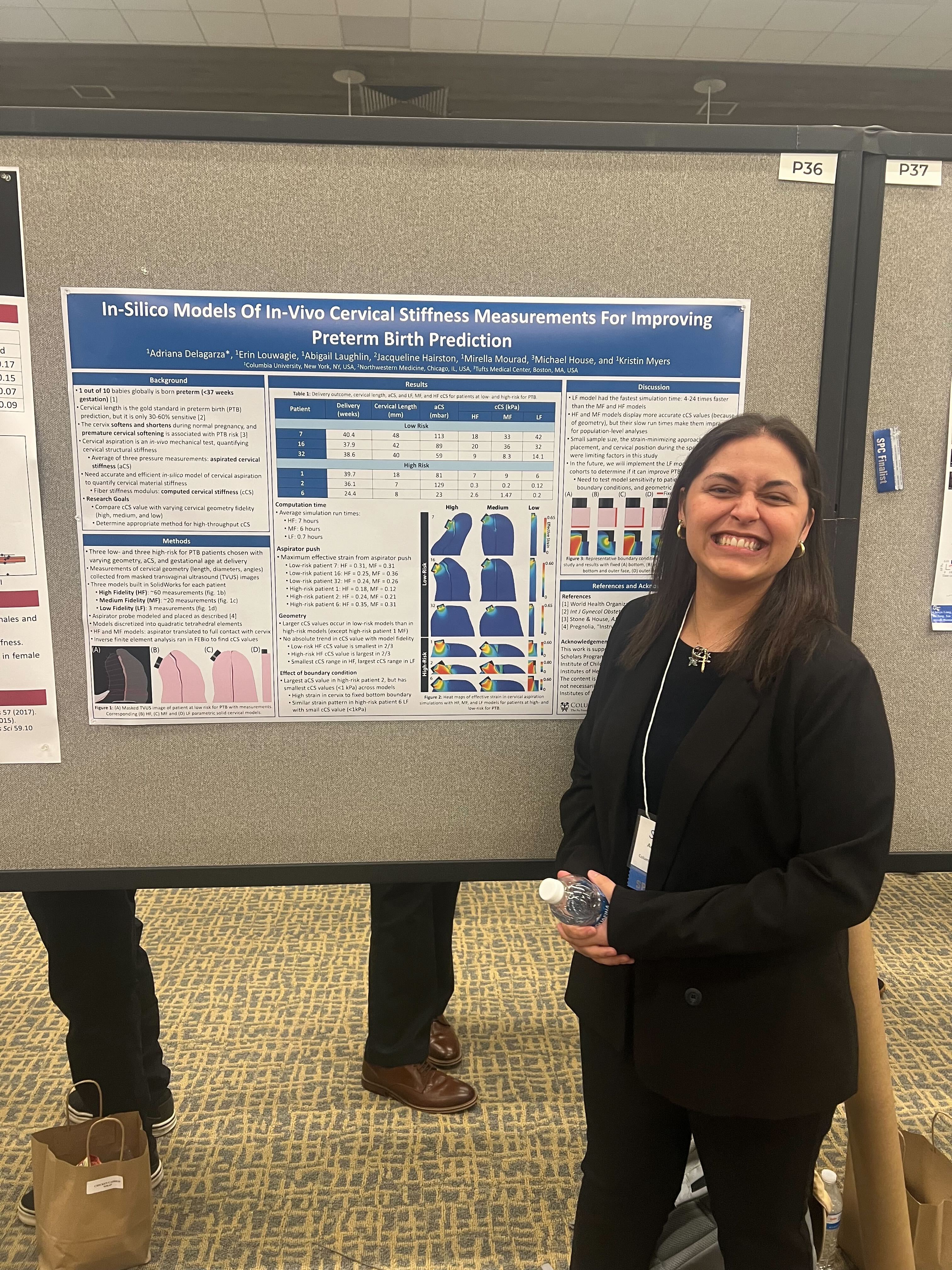
Adriana was a finalist in the undergraduate poster competition and did a fantastic job sharing her work on “In Silico Models of In-Vivo Cervical Stiffness Measurements for Improving Preterm Birth Prediction”.
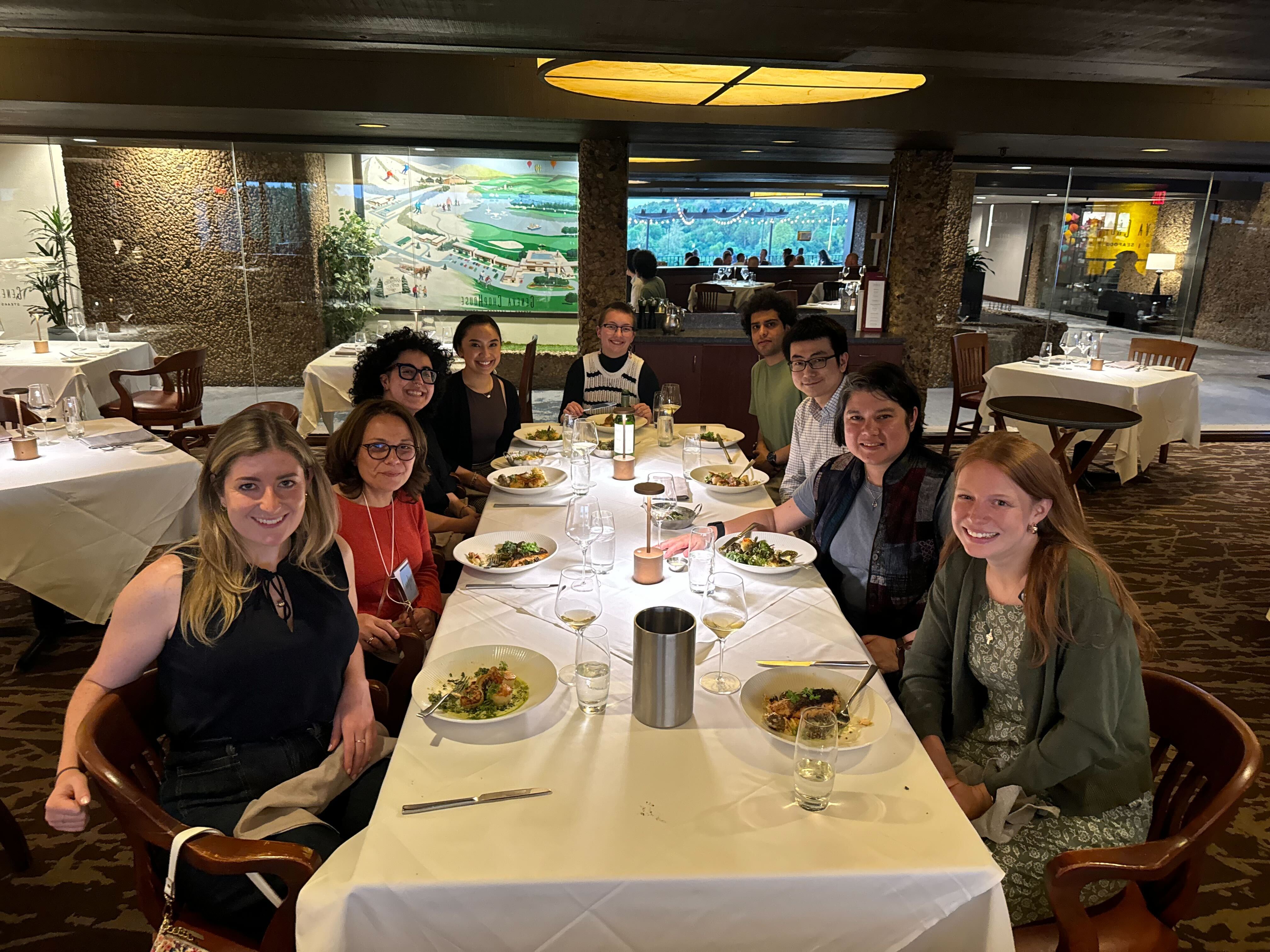
Other conference highlights included meeting with LEAP collaborators over dinner, a celebratory dinner in Lake Geneva with a huge Columbia crew, and of course enjoying the music at the yearly BEDRock concert!! We already can’t wait for next year!
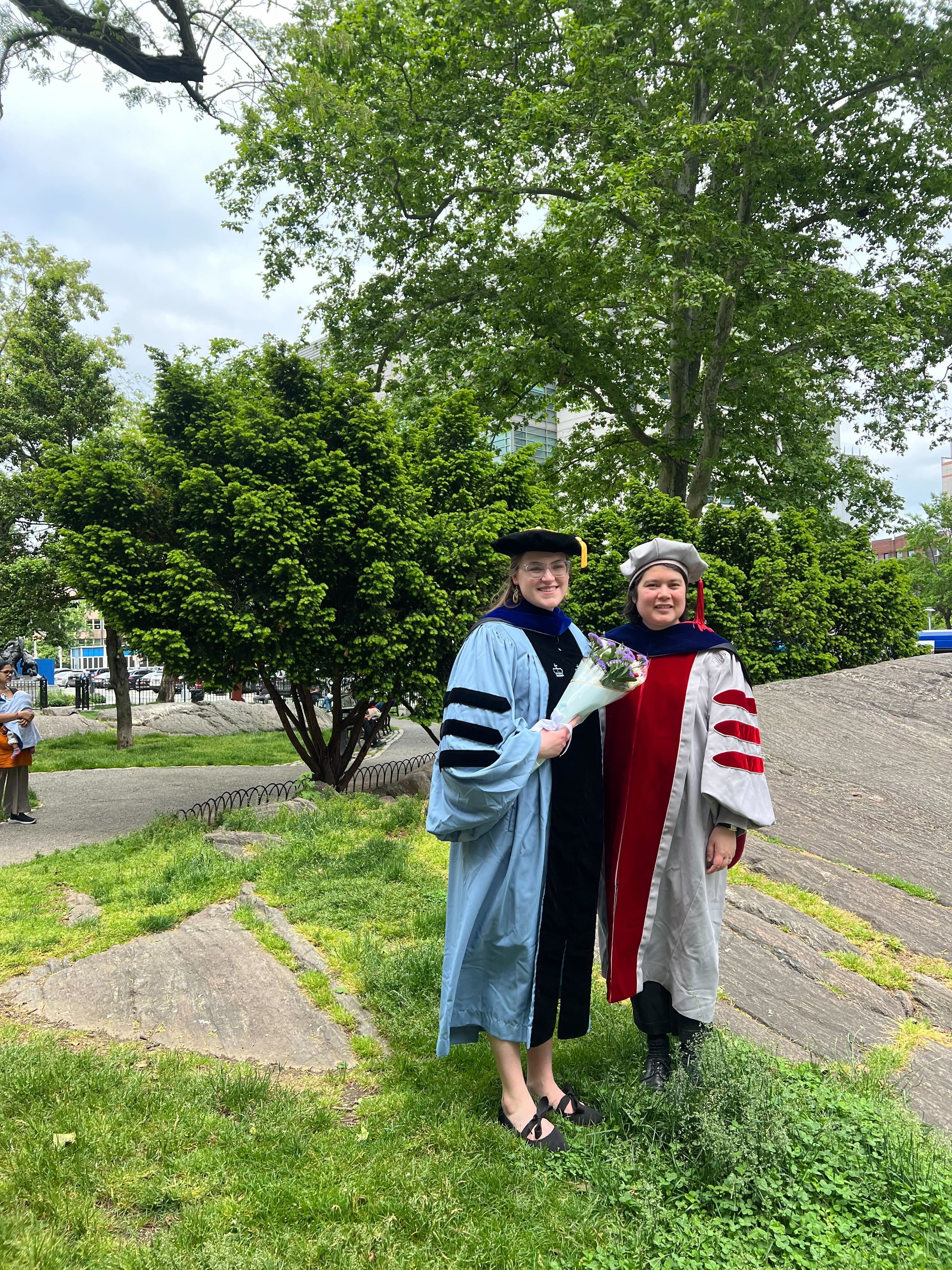
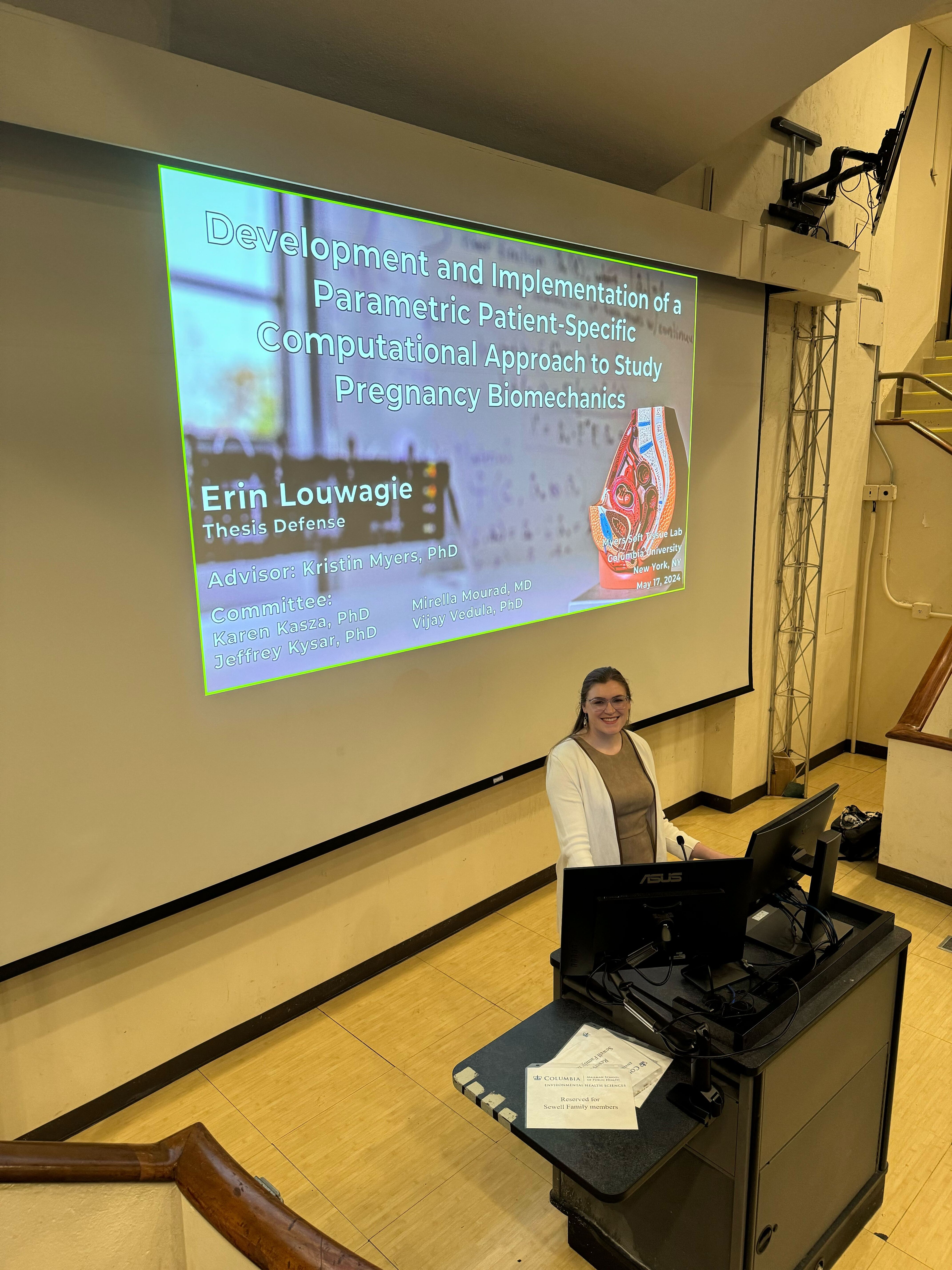
The Myers Lab celebrates Erin Louwagie successfully defending her doctoral thesis! Erin’s research focused on developing parametric, patient-specific computational models to study pregnancy biomechanics for patients at low-risk and high-risk for preterm birth! Great work Dr. Louwagie!!
We present tension-compression mechanical data, nonpregnant vs. pregnant comparison, and mechanical parameters fit to a microstructurally-inspired material model for the human uterus, with tissue fiber architecture characterized via optical coherence tomography. The pregnant human uterus was found to be less stiff, more extensible, and more dispersed in its fiber architecture compared to nonpregnancy.
We proposed two new parametric methods to model the at-term human uterus: one with numerous detailed measurements of the uterine coronal shape and one with an averaged uterine coronal shape. We compared the two new parametric modeling methods to our previous parametric modeling approach and to models generated from MRI segmentation through computational simulations of uterine pressurization. These approaches make it possible to study a wide range of maternal anatomy in birthing simulation.
“My hope is that we could take a simplistic ultrasonic scan of maternal anatomy and be able to assess how this uterus is going to grow and stretch, and better time when labour is going to happen.” Check out the linked article.